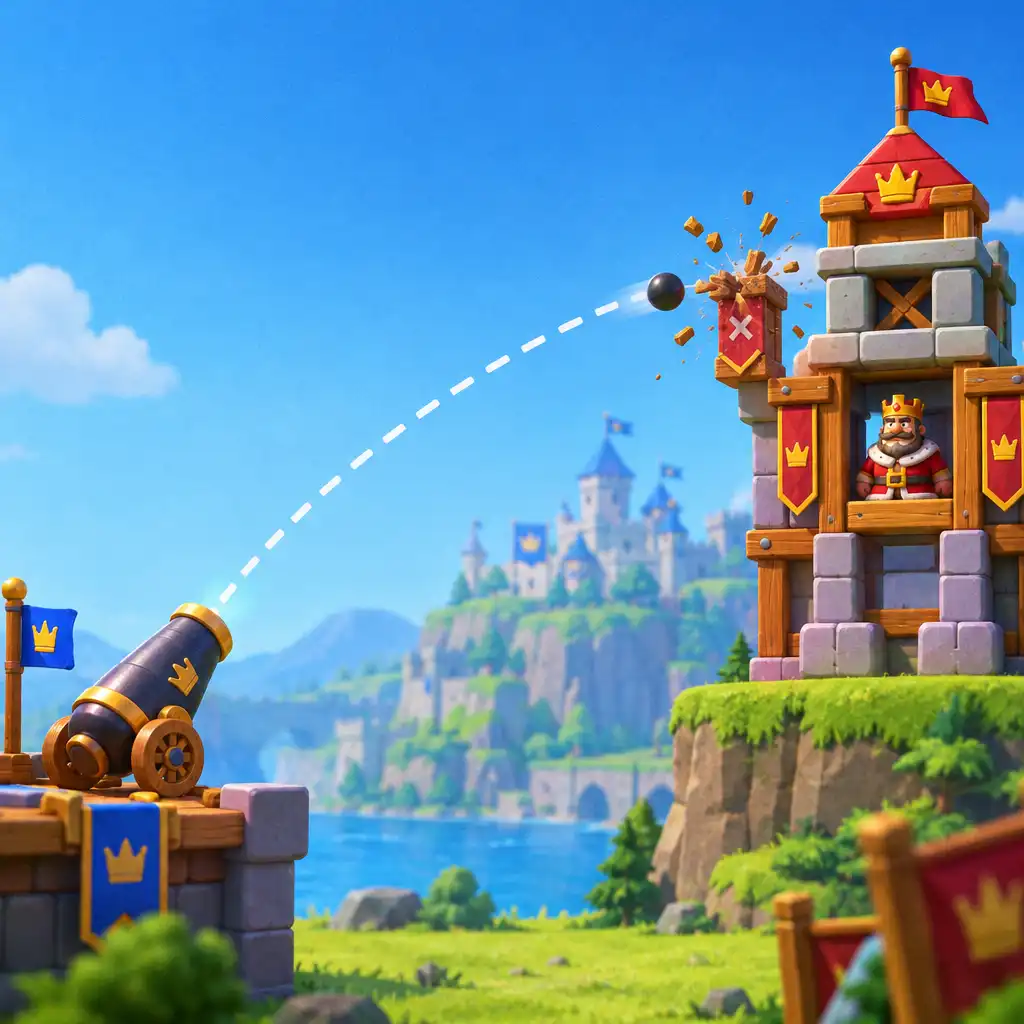
Master the Smash: Your Guide to Levels and Progression

Royal Smash! - Physics Puzzle offers a structured journey through increasingly complex physics-based puzzles. This guide breaks down the level system, progression mechanics, and difficulty curve so you can plan your approach and smash through every stage.

  • The game features a linear level progression with branching optional content.
  • Understanding level types and mechanics is key to efficient advancement.
  • This guide covers everything from early tutorials to late-game challenges.
Read the Guide

Understanding the Level Structure

Linear Progression with Branching Paths

Royal Smash! uses a linear level progression where each completed level unlocks the next. However, some levels offer optional branching paths that lead to bonus content or alternative challenges, adding replay value. Main path levels are numbered sequentially, while branching paths may require specific conditions to unlock. Bonus levels often reward extra currency or power-ups, so it is worth exploring every route.

Progression is sequential, but optional branches add variety and rewards.

Worlds and Themes

Levels are grouped into thematic worlds, each with a distinct visual style and set of obstacles. As you progress, the environments change from simple castle courtyards to more complex industrial or fantasy settings. Each world introduces new mechanics gradually, and visual variety keeps the experience fresh. World transitions often coincide with difficulty spikes, so be prepared for a step up in challenge.

Star Ratings and Replayability

Each level can be completed with one to three stars based on performance, such as number of shots used or objects destroyed. Earning three stars may unlock additional rewards or achievements, encouraging replay. Star requirements vary by level, and replaying levels can help farm currency. Some achievements are tied to star collection, giving completionists extra goals.

Level Types and Challenges

Standard Destruction Levels

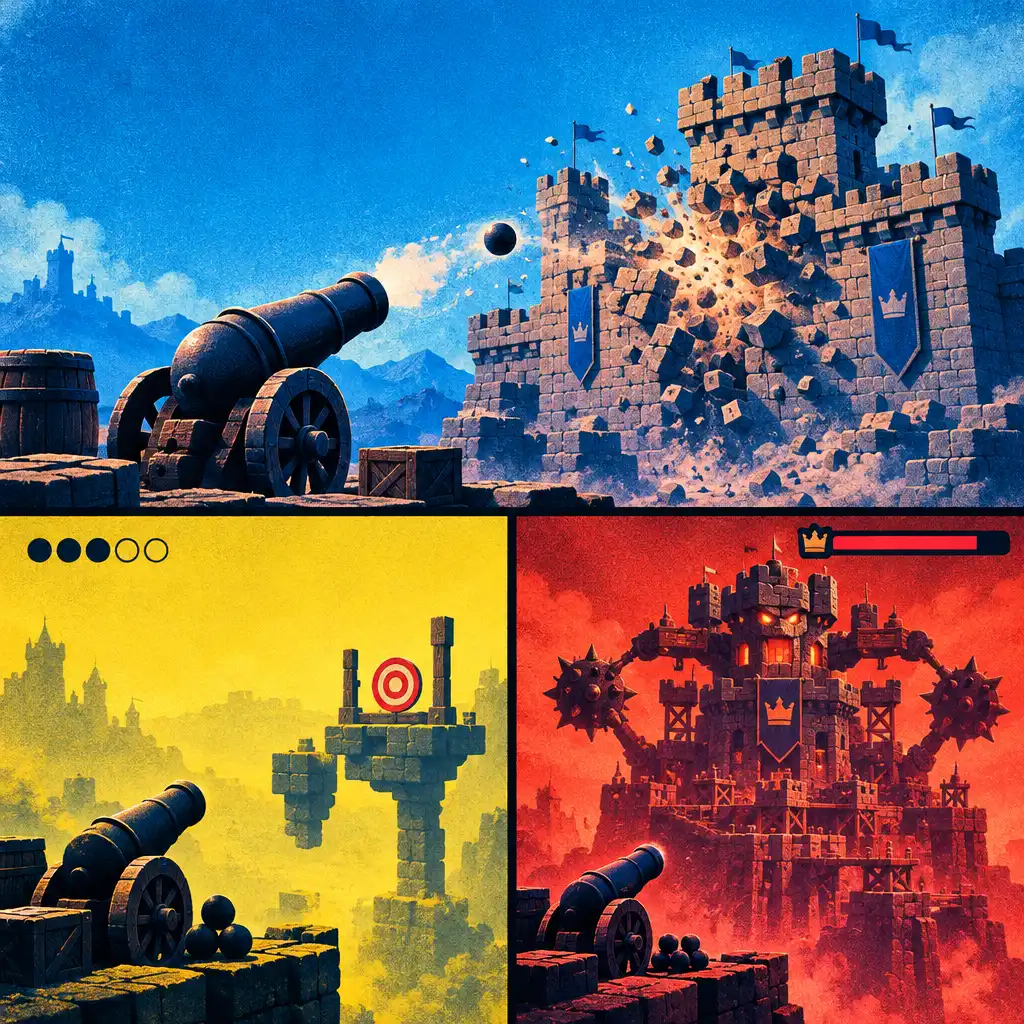
The core gameplay involves using a cannon to fire projectiles at structures made of blocks, aiming to destroy all target objects or cause maximum collapse. These levels test your aim and understanding of physics. Targets may be specific objects or all destructible items, and limited shots add challenge. Chain reactions are key to efficiency, so look for structural weak points.

Puzzle and Precision Levels

Some levels require precise shots to hit small targets or trigger specific chain reactions. These puzzle levels often have fewer shots available and demand careful planning. Precision aiming is crucial, and environmental elements like explosives can be used. Trial and error is common, but each attempt teaches you more about the physics engine.

Precision levels reward patience over speed.

Collage of three Royal Smash! level types: a castle destruction level, a precision puzzle target, and a large boss structure
Standard, precision, and boss levels each demand a different approach.

Boss and Special Levels

Occasionally, players face boss levels with unique objectives or larger structures. These levels often introduce new mechanics or combine multiple challenges. Boss levels may have time limits or special conditions, and they often reward significant currency or power-ups. They serve as milestones in progression, so expect a satisfying payoff when you clear one.

Progression Mechanics and Currency

Earning Stars and Rewards

Stars earned from levels contribute to overall progression. Accumulating stars may unlock new worlds, special levels, or cosmetic rewards. The exact thresholds vary, but aiming for three stars on each level is beneficial. Stars are awarded based on performance, and some worlds require a minimum number of stars to unlock. Rewards may include currency or power-ups, so every star counts.

Star thresholds differ by world; check the level select screen for requirements.

In-Game Currency and Its Uses

Royal Smash! features an in-game currency that can be earned through gameplay or purchased with real money. Currency is used to buy power-ups, extra shots, or cosmetic items. It is possible to progress without spending money, but purchases can speed up advancement. Currency can be earned by completing levels and achievements, and power-ups can help overcome difficult levels. Purchases are optional and not required to enjoy the game.

Power-Ups and Boosters

Power-ups provide temporary advantages such as extra damage, additional shots, or aim assistance. They can be earned or purchased and are especially useful on challenging levels. Common power-ups include multi-ball and explosive shots. Power-ups can be activated before a level, and using them strategically can save time.

  • Multi-ball: fires multiple projectiles at once.
  • Explosive shot: increases blast radius and structural damage.
  • Aim assist: shows trajectory more clearly for tricky angles.

Difficulty Curve and Challenge Scaling

Early Levels: Learning the Basics

The first few worlds introduce core mechanics gradually: aiming, power, and basic destruction. Levels are forgiving with ample shots and simple structures, allowing players to learn without frustration. Tutorial prompts guide new players, and structures are small and easy to collapse. Fewer obstacles and hazards mean you can focus on mastering the fundamentals.

Beginner

Mid-Game: Introducing Complexity

As you progress, levels introduce new materials, moving parts, and limited shots. Chain reactions become more important, and precise aiming is required to trigger collapses. New block types with different properties appear, and levels may have multiple stages. Shot limits become tighter, so every projectile must count.

Late Game: Mastery Required

Late-game levels demand mastery of physics, efficient use of power-ups, and sometimes luck. These levels are designed to challenge even experienced players and may require multiple attempts. Complex structures with many interconnected parts, limited shots, and high star requirements make power-ups almost essential.

Early
Mid
Late

Tips for Efficient Progression

Master the Basics First

Before attempting advanced techniques, ensure you have a solid grasp of aiming, power control, and understanding how different materials react. Practice on early levels to build muscle memory. Spend time in early levels to experiment, learn the trajectory of different projectiles, and understand how block types affect collapse.

  • Experiment with low-power and high-power shots.
  • Watch how different block materials break.
  • Replay tutorial levels until aiming feels natural.

Use Chain Reactions to Your Advantage

Chain reactions are the most efficient way to clear levels. Look for structural weaknesses and aim to trigger cascading collapses that destroy multiple targets with a single shot. Identify load-bearing blocks, use explosives to amplify damage, and plan shots to maximise collateral damage.

Manage Your Resources Wisely

Don't waste power-ups on easy levels. Save them for challenging stages where they can make the difference between success and failure. Also, consider replaying levels to farm currency if needed. Power-ups are limited; use them strategically. Replaying levels can yield extra currency, and avoid spending real money unless necessary.

Common Pitfalls and How to Avoid Them

Rushing Shots

Taking shots too quickly often leads to wasted projectiles and missed opportunities. Take time to assess the structure and plan your shot for maximum impact. Observe the structure before firing, consider the angle and power needed, and don't be afraid to restart if needed.

Ignoring Chain Reaction Opportunities

Focusing on individual targets instead of structural weaknesses can make levels harder than necessary. Always look for ways to cause cascading collapses. Check for weak points in the structure, use explosives to trigger chain reactions, and aim for the base of structures.

Overusing Power-Ups

While power-ups can be helpful, relying on them too heavily can deplete your resources and make the game less satisfying. Use them sparingly and only when necessary. Save power-ups for difficult levels, try to solve puzzles without assistance first, and replay levels to earn more currency if needed.

Power-ups are a tool, not a crutch.

A cannon shot missing the main structure and hitting a non-essential block, leaving the target intact
A rushed shot often leaves the main structure standing.

Level Progression FAQ

How many levels are in Royal Smash!?

The game features a large number of levels across multiple worlds, with new levels added in updates. The exact count may vary, but players can expect dozens of hours of content. Levels are grouped into worlds, and updates may add new levels. The game is designed for long-term play.

Can I replay levels to earn more stars?

Yes, replaying levels is encouraged. You can earn better star ratings and additional currency by replaying, which can help unlock new content. Replaying levels is free, star ratings can be improved, and currency rewards may be reduced on replays.

Do I need to spend money to progress?

No, the game can be completed without spending money. In-app purchases are optional and primarily for convenience or cosmetic items. However, some players may find purchases helpful for difficult levels. All levels are accessible without payment, purchases are optional, and power-ups can be earned through gameplay.

Final Thoughts and Next Steps

With a solid understanding of level structure, progression mechanics, and effective strategies, you're well-equipped to tackle Royal Smash! - Physics Puzzle. Remember to plan your shots, use chain reactions, and manage resources wisely. Practice makes perfect, don't be afraid to experiment, and check out our other guides for more tips.

Explore More Guides